


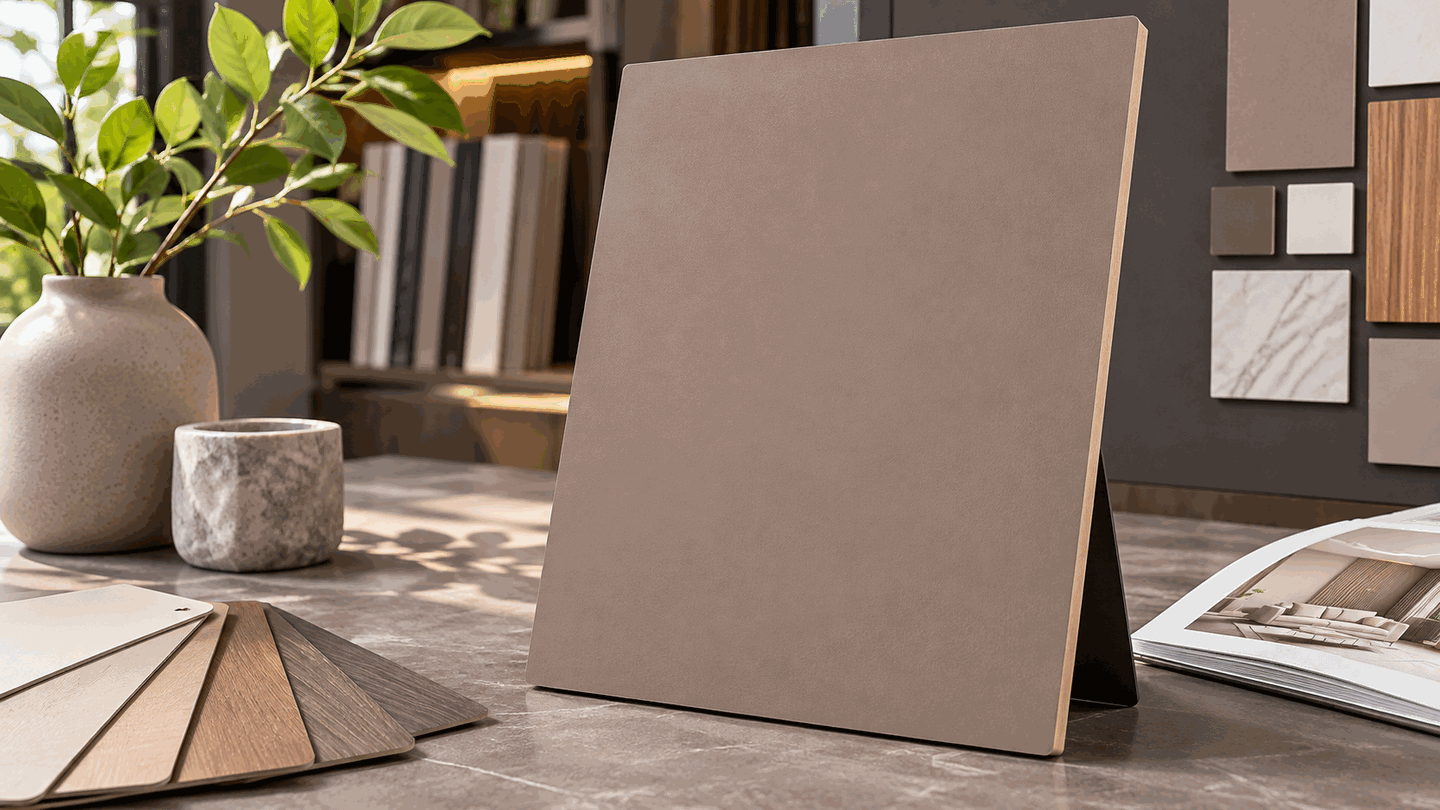
QUICK ANSWER
Taupe 158 LU is a CenturyLaminates catalog entry for the Taupe design, number 158, in the LU finish. CenturyPly lists Taupe 158 AP separately. Use the full code when requesting a sample or ordering sheets.
A supplier sends a photo of a board marked “158,” and the colour looks close to the sample you picked. Before you approve the order, ask to see the letters that follow the number. They are part of the product code. A close match on a phone can still leave two people talking about different finishes.
You can settle most of the questions before a sheet arrives. Find the manufacturer’s entry, get a labelled sample and use that sample in the actual room. Then make sure the written quote describes the same sheet and the same areas you want to cover.
What the catalog code tells you
The official CenturyPly Taupe 158 LU page puts Taupe in the Lookbook range and shows the complete LU code. Use the catalog entry as a reference when speaking with a supplier. Ask them to match the product label and tell you which sheet specifications they can deliver.
CenturyPly also has a separate Taupe 158 AP entry. The entries share the design name and number. For ordering, the finish letters still need to match your sample. If you want to compare the two, ask for one physical sample of each and keep their labels visible.
| What you see | Meaning for your order |
|---|---|
| CenturyLaminates Lookbook | Manufacturer range to match in the catalog |
| Taupe | Design name |
| 158 | Design number shared by the two listed entries |
| LU | Finish code on the chosen entry |
| AP | Separate finish entry to check if offered as an alternative |
| Sheet size and thickness | Additional product details to confirm in the quote |
| Edging | Separate material or code to approve if the project requires it |
Agree on the room and the surface before buying
The same sample will look different when laid on a table and held upright beside a window. Decide whether it is for doors, side panels, a counter or another part of the room. Show the supplier or installer where the surfaces are going and ask which products they specify for that use. Make sure the quotation includes the relevant sheet details in addition to the design code.
For a kitchen, compare the sample with the worktop, backsplash and floor. Think about which surfaces actually touch. If one laminate panel will meet another material at eye level, hold the pieces at that angle instead of putting everything flat on a desk. For an office or wardrobe, check the sample in the part of the room where you are most likely to see it.
Keep a record of the precise surfaces you want to cover. “Cabinet finish” can mean fronts alone or fronts plus exposed sides. “All visible panels” can sound clear until someone has to decide what counts as visible when a door is open. A sketch or marked photo is useful alongside a written panel list.

Compare the sample under daylight and room lights
Choose one labelled piece and take it to the room. Check it near the neighbouring wall or worktop during the day, then revisit it under your normal lights. Look from the doorway and again from the place where you work or sit. A close-up can show details that are hard to see from a normal viewing distance, and both views matter.
If the room is unfinished, keep that in mind when approving it. Bare plaster and temporary lighting offer a different setting from painted walls and installed lamps. Bring a sample of the intended wall paint or the worktop if you have it. Confirm that you are judging the colour beside something close to its final surroundings.
Ask who gets to sign off on the sample if several people are involved. Each person should look at the same labelled piece. A photo in a group message can show which option you mean, but a screen’s colour settings can change how it looks to each viewer. Attach a photo of the code to the approval so there is a record even after the sample goes back.
Make the specification readable to someone who wasn’t there
Use one line for the manufacturer, range, colour, finish and agreed sheet details. Put the panel locations on their own line. If the order includes matching or contrasting edging, record that choice separately and keep the edge sample with the laminate sample. A supplier who only sees the written order should be able to identify the same combination you discussed.
The product page includes a properties table with separate column headings for more than one thickness. Before relying on a listed property, confirm which column and sheet specification apply to the material quoted for your job. Ask for the current technical information if you need a particular installation method, surface use or cleaning routine. Keep that document with the quote.
If one material appears on different rooms or joinery orders, give each room its own panel list. It helps the installer find where a finish changes, particularly where adjacent rooms meet. Mark any areas where a sample was approved as a deliberate alternative. That avoids a later disagreement over whether a different finish was ordered intentionally.
Handle substitutions while you can still see both samples
An installer may suggest an alternative because it is available sooner or fits a price. Ask for its complete code and a physical sample, then compare it in the same place as the original. When a substitute is accepted for only part of a job, spell out which panels are affected and where the original code still applies.
Get the change in writing before the supplier cuts or fits the sheets. Keep the approved sample available when the order arrives so the labels can be compared. If part of a package arrives with a different marking, ask the supplier to identify it before installation. Checking before cutting is simpler than trying to match a finished panel later.

What to confirm once the order arrives
Compare the sheet label and paperwork with the approved sample. Inspect the visible surface under ordinary light and alert the supplier if anything looks unexpected. If the delivery is for several rooms, keep enough identification with each set so staff can trace which sheets came from which order. Ask the installer what spare material, if any, you should keep after finishing.
For future cleaning or repair, keep the manufacturer name, code and any approved maintenance information together. A later owner or contractor may see a plain taupe surface but need the complete code to ask for a replacement. If the original finish is unavailable later, those records make it easier to identify a close option and compare it openly.
Keep an approval note when several people are ordering
In a small project the same person may select, buy and fit the laminate. On a larger one, a homeowner, designer, merchant and installer may each hold a different piece of the specification. Share a single approval note. Include the design and finish, the surfaces where it belongs and a photograph of the label. If the installer needs a different sheet size or another piece of trim, record that separately before anyone places a new order.
Date any revision. If the wall paint changes after you select the laminate, bring the approved sample back to the room rather than assuming the earlier decision still works. If the job pauses, ask whether the quote and delivery terms are still valid before paying for more sheets. Each of these checks takes little time when the approved finish and the order history are easy to find.
For more than one delivery, keep the invoice references with the panel list. That makes it easier to check a later replacement request against the order that supplied the original sheets.
Questions people ask about Taupe 158 LU
Can I order by saying “Taupe 158”?
Give the full code. The LU and AP listings share the basic name and number. Add the manufacturer and range so the supplier can find the particular product you approved.
Does the catalog photo settle the colour?
Use it to identify the product. For approval, use a physical sample in the space where it will be fitted. Room lighting, neighbouring materials and the position of the surface affect how it looks.
How do I check the thickness?
Ask the supplier to write the quoted thickness and sheet size in the order. Compare those details with the relevant manufacturer information and the installer’s requirements for that surface.
Should I approve matching edging from the same photograph?
Look at an actual sample of the edge material beside the laminate if the seam matters. Get the edge choice recorded independently so it does not disappear into the reference to “Taupe.”
What should I save for later repairs?
Save the quote or invoice, the full code, a photo of the product label and a sample if you can keep one. A record of which surfaces it was used on will also help when a single door or panel needs attention.
