


QUICK ANSWER
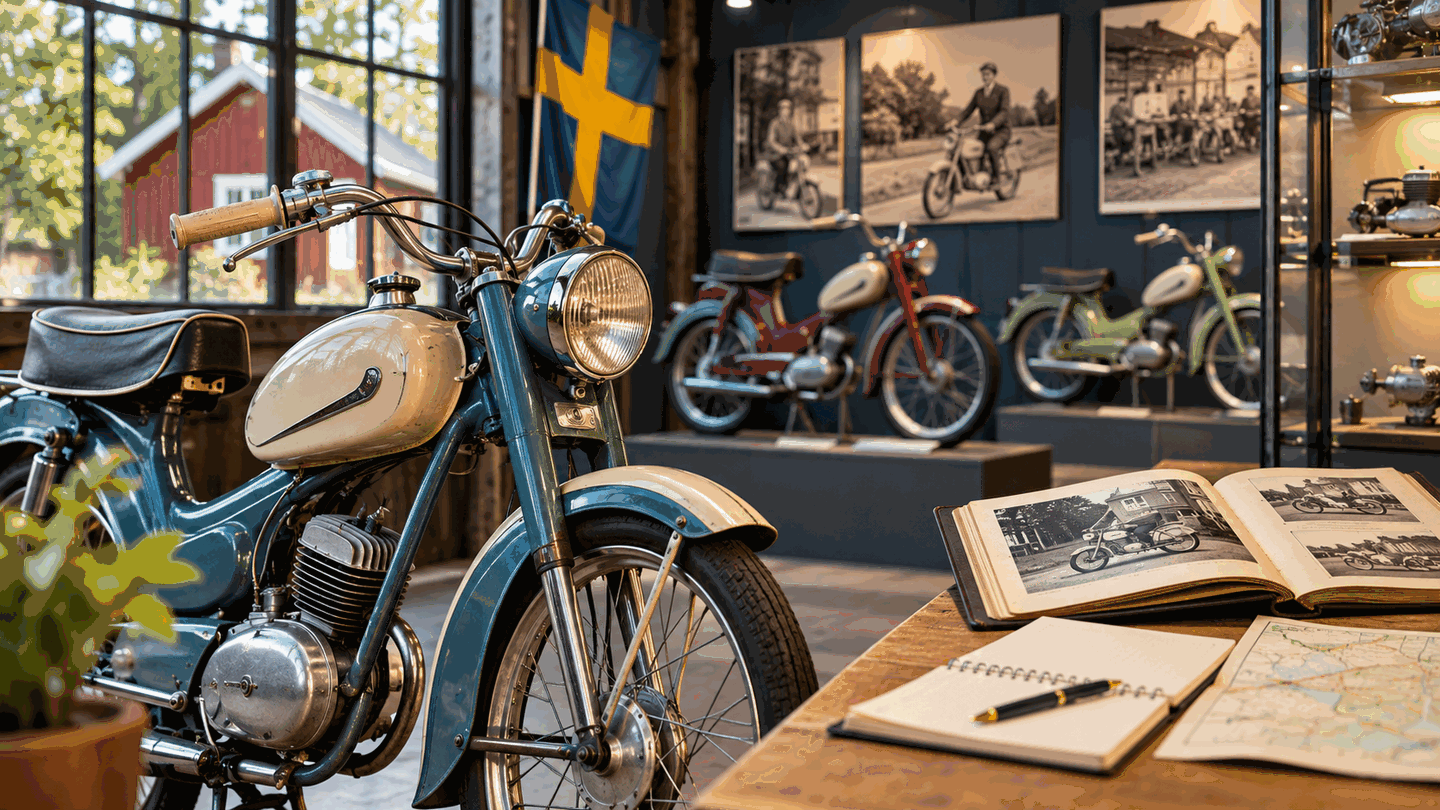
Mopedum was a Swedish nostalgia museum in Nynäshamn that closed permanently in December 2022. Vällingby Centrum acquired material from the collection and now shows recreated period rooms and a selection of vintage mopeds.
The easiest way to misread Mopedum’s history is to treat every result as a description of the same place at the same time. An old review might send you to Nynäshamn. A current exhibit listing might show a similar kitchen, store counter or moped somewhere in western Stockholm. Both can make sense once you separate the original museum from the public display that followed it.
That distinction matters even if you are more interested in the objects than in making a visit. A photo of an old kitchen tells one story about the objects on display. The way that room was recreated in another setting tells a second story about what somebody chose to preserve. Mopedum’s footprint can be traced through both.
What Mopedum collected in Nynäshamn
The original museum brought vintage mopeds together with household objects and scenes from everyday Swedish life. The Explore Archipelago listing for Mopedum names its old address as Vikingavägen 39 in Nynäshamn. Its description evokes Swedish life in the 1950s, 1960s and 1970s, mentioning leisure and consumer items alongside vintage machines. It also announces that the museum would close permanently in December 2022.
That combination of exhibits explains why people remember it in different ways. A visitor who went to see mopeds might recall the marks, tanks and frames. A person who went with family might remember the household objects and the chance to hear an older relative explain one. These are two ways of reading the same collection. One begins with design and portable transport. The other begins with the situations in which people might have used the objects.
| Date or subject | What is documented | What it means for a reader |
|---|---|---|
| Original museum | Vikingavägen 39, Nynäshamn | Historical location, no longer an operating museum |
| December 2022 | Permanent closure announced in the regional tourism listing | Old reviews and schedules can still circulate |
| After the founders retired | Vällingby Centrum says it acquired museum contents and several mopeds | Follow the new operator for information on displays |
| March 2023 | Vällingby Centrum announced a public corridor exhibition | A successor display in a different setting |
| 1952 to 1979 | Date range given for the Vällingby exhibition | Years represented by its objects, separate from museum operating dates |
From retirement to a new display
Vällingby Centrum’s exhibition page identifies Nisse and Lotta Skogmyr as the owners and creators of Mopedum. According to the centre, it acquired contents from the museum and a number of its mopeds after they decided to retire. The page explains that period rooms were recreated behind glass in the shopping centre’s passages. That is useful direct evidence of what the acquiring party says it did, even though it does not publish a complete list of every individual item purchased.
The centre also published a March 2023 launch notice, announcing an opening on 17 March. It identifies the public corridors as the setting and names several of the recreated rooms. The announcement helps establish the date of the new exhibition. Use the centre’s current exhibit page instead for information about which displays can be seen now.
The change of setting also changed the visit. An independent museum in Nynäshamn and a series of glazed displays in a Stockholm shopping centre create different experiences. The object labels and placement may be different, and a visitor can come across these displays while doing something else. If you have a memory of a particular room in the old museum, check which room the centre identifies today rather than expecting the original rooms to have moved in their entirety.
What a moped can tell you alongside a kitchen
Vällingby Centrum describes the successor exhibit as drawing on objects from 1952 to 1979. The centre’s public description gives examples that include a shop interior, a 1950s kitchen and a children’s room with wallpaper from the 1970s. It also lists a selection of Swedish and European mopeds with brands including Crescent, Husqvarna, Monark, Fram and Victoria. The point of the display is broader than listing vehicle specifications.
Try putting two objects in the same decade side by side. A moped reflects what designers and buyers wanted from a small vehicle. A kitchen fitting or a product sold over a counter reflects a different daily need. The displays give a viewer a basis for asking what changed at home, where people shopped, and how they got from one place to another. Different objects can fill in parts of the story that a line of vehicles alone would leave out.
You can also ask questions of the objects before you know all their dates. Look for the way an item was operated, the material you can see, and the markings that identify who made it. Then compare those details with the label. If a specific model matters to you, copy the whole designation and any year the exhibit gives. A manufacturer can appear more than once, and some of the differences are easier to spot when you can compare what the labels actually say.
Why the new location matters for the history
The timing of the objects on display overlaps with the history of Vällingby itself. Stockholmskällan’s account of the city’s postwar expansion identifies Vällingby as Stockholm’s first ABC town, opened in 1954. The three letters stood for the Swedish words for work, housing and centre. Its design aimed to bring jobs, homes and a centre with services into everyday reach.
An archival photograph of the centre’s November 1954 opening gives a period view of what the centre’s developers and visitors were looking at when that idea was new. A photograph and an exhibit answer different questions. The photograph can place a crowd or public event in time and space. A restored room or display can help a modern visitor look closely at objects associated with the period. The two are useful together, particularly when trying to picture what shopping and home life meant to people living in a newly planned suburb.
This context adds another layer to the older museum’s initiative. At the original Mopedum, a collection about Swedish everyday life brought people to a museum. The later display puts some of that material in the middle of the kind of commercial centre that helps tell the same story. If you visit today, looking out from the exhibits towards the centre itself is part of the interest.
How to trace one object or photograph
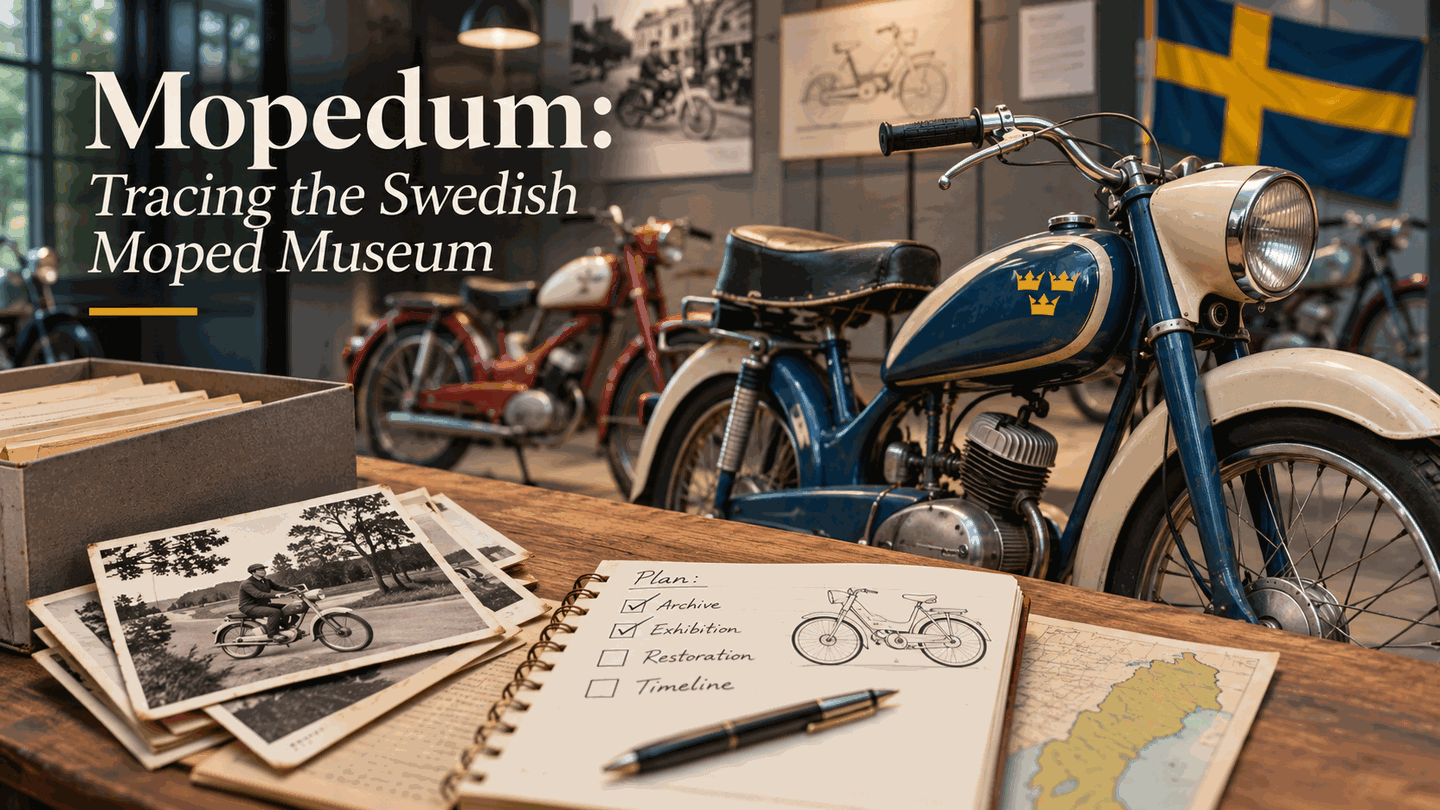
If an older picture matters to you, write down where it was taken and what is actually visible. Mopedum in Nynäshamn and Nostalgimuseum in Vällingby are good labels for the two places. If you cannot establish the place from a photo, say that. A similar room can appear in images from more than one venue, and the same object may have a different background or label after being moved.
For a moped, use the name on the label or machine alongside the location and approximate date of the photograph. Ask the current exhibit operator whether the item is on display, and give them the detail that distinguishes it from another model. For a household object, record what part of the room it appears in. A maker’s mark or packaging can help, but you should avoid identifying an exhibit based on colour alone. The available sources establish that material and several mopeds moved, not that each photographed object travelled to the same place.
Current display details to check
The centre’s current exhibit page identifies the moped case with the beginning of Pajalagatan and describes displays distributed through the centre. That is more useful for planning than an old Nynäshamn museum review. If one object is the purpose of your trip, confirm with the operator before leaving. Exhibits can be rearranged and public hours can change, especially when the space shares an operating schedule with a commercial centre.
Questions about Mopedum’s history
When did Mopedum close?
Explore Archipelago records a permanent closure in December 2022. Any opening hours you find for the original Nynäshamn museum should be treated as historical information.
Did the museum reopen under the same name?
The successor exhibit is described by its current operator as Nostalgimuseum at Vällingby Centrum. It presents recreated environments and a selection of mopeds. The original museum address remains part of the Nynäshamn site’s history.
Who bought the museum collection?
Vällingby Centrum says it acquired museum contents and several mopeds after Mopedum’s owners retired. Its exhibit description gives examples of objects on display but does not offer a complete public catalogue of the acquired material.
Why do different posts give different dates?
One date may refer to the closure in Nynäshamn, another to the 2023 launch at Vällingby, and a range such as 1952 to 1979 to the period represented by the objects. Check what each date is attached to before citing it.
For researchers, it helps to record where and when you checked a label. An exhibit can change even while an older web page remains available. Keep the operator’s name with the label and note separately what you saw in a photograph, what the centre confirms in writing, and what is still uncertain.
