


QUICK ANSWER
The phrase ext:asp intitle:CID points to a possible address suffix and the letters CID in a title. It cannot identify what CID means on a particular site. Check the publisher’s own records and inspect the exact page.
An old navigation label can take on a life of its own. A publishing team remembers it as a section name. A colleague assumes it was an ID. A search screenshot preserves the letters without the rest of the heading. If everyone starts with a different assumption, it becomes difficult to tell whether they are discussing the same page.
Begin with the complete URL and the words around CID. If the question is about a site you manage, ask what the page was designed to communicate to a reader. Then check which part of that information is public today and which part is visible only in a historical record.
What the two parts can and cannot establish
The phrase combines wording about an address suffix with wording about a title. ASP is associated with classic Active Server Pages. Microsoft’s IIS configuration reference describes ASP in its original server context. A suffix can persist in a URL even after a site changes platforms, so it cannot confirm what currently serves the page.
CID has no universal meaning in a page title. It might be an abbreviation used by one organisation or part of a longer title. A screenshot alone cannot tell you which. Look for a definition on the page, in the publisher’s navigation or in a glossary maintained by the organisation. If the letters only appear in a clipped title, obtain the complete wording before spelling them out in public.
Google’s documentation about search filters also says these results are limited by indexing and retrieval. Treat a screenshot as a dated observation. Use the records of the page itself for questions about meaning or current status.
Determine whether CID belongs in the public headline
On your own site, ask the editor who knows the subject to confirm what CID stands for in this instance. Check whether readers already encounter the letters in the article or elsewhere in the section. An audience that recognises the term may benefit from seeing it in the title. An audience unfamiliar with it may need the full name there or in the introductory sentence.
If it is an internal code from a publishing system, ask whether it serves readers. You may decide to keep the label in your editorial record and display the public name in the title instead. Confirm that decision with the team before editing several similar pages. Abbreviations can have separate meanings across departments. Replacing them in bulk on the basis of one occurrence can change unrelated material.
| Evidence you find | What it supports | Next check |
|---|---|---|
| A full definition in the article | What CID means in this page’s context | Verify the linked reference or editorial record |
| Letters in the browser title only | Wording used in one title field | Compare the live heading and template settings |
| Letters in a dated screenshot | What the reader saw then | Open the complete link and compare dates |
| A suffix in the public link | How the URL is written | Consult publishing records for the actual platform |
| Another page appears in the result | A different address is being presented | Inspect the expected page and check canonicals |
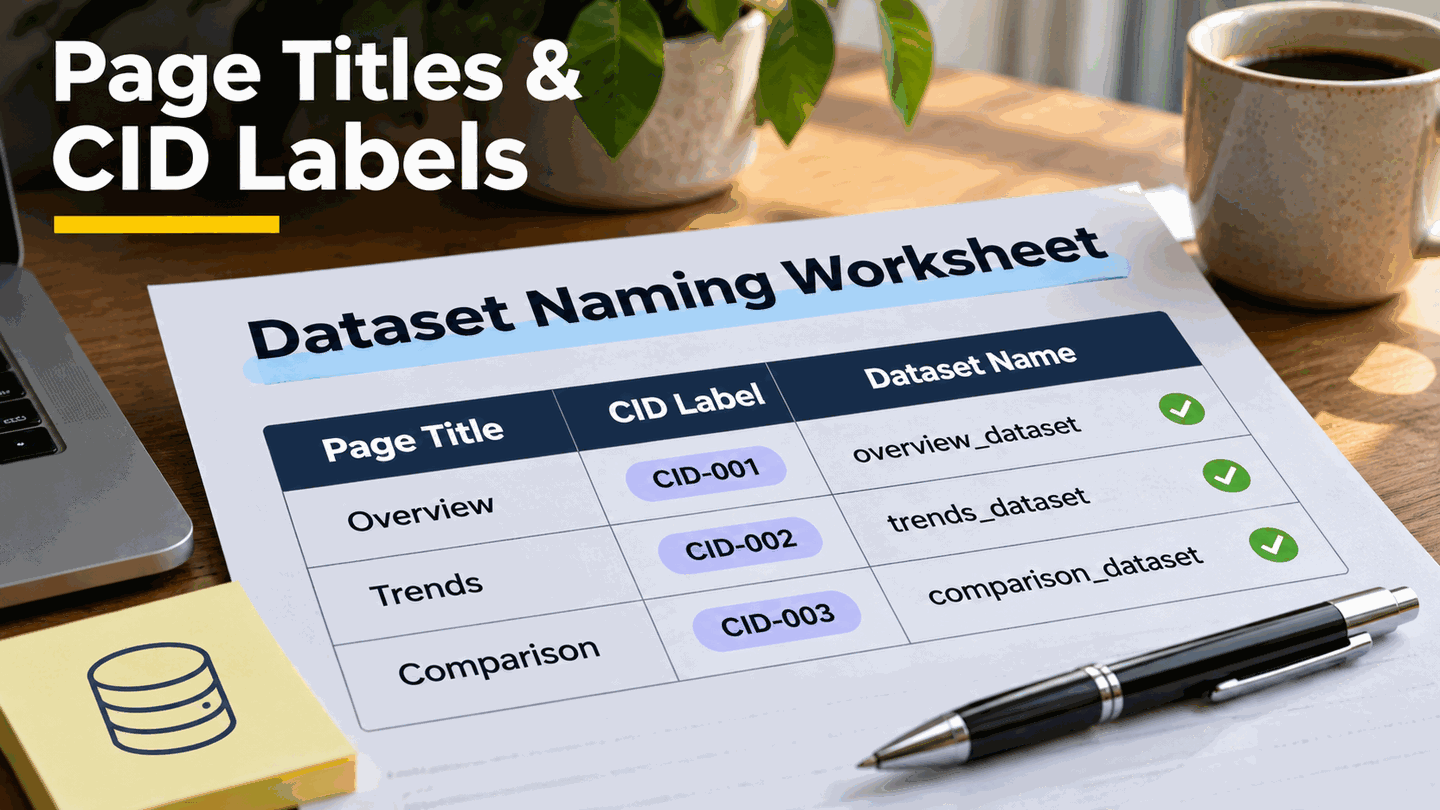
Work through a catalogue example
Suppose you help maintain a public catalogue. A staff member reports that a result title says “CID” followed by a number, while the visible product page has a plain-language title. Start by opening the exact link they sent. Record the final destination, browser title and primary heading.
If the title field still contains CID because the catalogue template copied an internal record label, fix the title field or template through the normal editorial workflow. Check a small sample of the affected pages before changing the whole catalogue. Pay attention to titles that deliberately include a label readers use. Those might need different treatment from pages where it has no public meaning.
A search title can also differ from the title of the live page even when the site’s fields are correct. Google’s title link explanation lists several possible inputs, including a main visual title and other prominent text. Compare the live fields and record the time of your title update before making another edit.
Check the indexed URL and the live page separately
In a verified Search Console property for your site, enter the full address into URL Inspection. Record the indexed status, reported crawl date and any canonical details. Then compare the report with your own log of which address and headline you published.
Use the live test if you need to understand the current page response. It can tell you whether Google can check that URL now. It cannot guarantee it will show the headline you supplied or that the page will be indexed. If an old result survives after a change, the crawl date can help you explain why the reports differ.

Check whether two copies are being treated as one
If the title in search seems to belong to another address, inspect the intended page and look at the canonical information where available. A canonical is a representative URL that Google may select when it finds duplicate or very similar content. Google’s canonicalization guide explains how a site’s preference and Google’s choice can differ.
Compare the selected address with your current content, links and sitemap. If it is an expected duplicate, note the relationship so the editor reviewing titles does not update a copy that readers are unlikely to see. If it is an unexpected representative, ask the site owner to confirm which address should be preferred before making changes to the other copies.
Questions readers ask
Does CID stand for the same thing on all websites?
No. A site or organisation may define the letters in its own context. Use the publisher’s wording or ask the people responsible for the page for a definition.
Does a title tell me where the page gets its data?
A title is a presentation label. Site owners who need to understand implementation should consult their publishing or deployment records.
What if I have only a clipped result image?
Ask for the full destination link and the date. A partial title cannot distinguish an old display from a current page or identify what the letters stand for.
What should I send to an editor to request a correction?
Send the complete URL, the text you saw, the intended public title and any supporting documentation. If you have Search Console access, include the crawl date or canonical only if it helps explain the issue.
For a related example of the limits of an indexed result, see our guide to web addresses and search results.
